

June 2023
Behind the Barriers: What It Really Takes to Run a Formula 1 Circuit
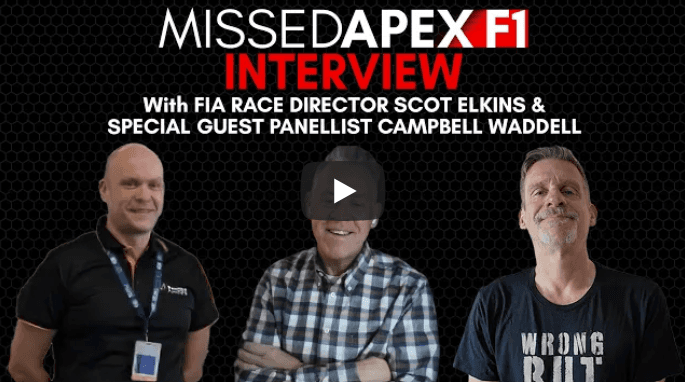
Motorsport is often judged by what happens on track. But the real story—the one that determines whether an event is safe, compliant, and insurable—happens behind the barriers.
In this episode of Missed Apex Podcast – Behind the Barriers, our CEO Campbell Waddell sat down with Missed Apex Podcast host Matt Ragsdale and Scot Elkins to explore the reality of running world-class motorsport events, including Formula 1 and Formula E.
The Reality of Modern Circuit Operations
Running a racing circuit today is a high-pressure, safety-critical operation.
It involves:
Coordinating large, distributed teams in real time
Managing incidents at high speed and high consequence
Maintaining strict compliance with governing body standards
Making decisions under pressure where timing is critical
At the top level of motorsport, these systems are highly refined.
At most venues—they’re not.
The Shift: From Experience to Systems
Historically, circuit operations relied on experience.
That still matters—but it’s no longer enough.
There is a clear shift across motorsport toward:
Structured processes
Digital systems
Data-driven decision making
Because ultimately:
If you cannot evidence what was done, it cannot be defended.
This is increasingly important for:
Regulators
Governing bodies
Insurers
Where Most Circuits Are Still Exposed
In practice, many venues still operate using:
Paper-based inspections
Disconnected spreadsheets
Messaging apps for operational updates
Manual reporting processes
This creates fragmentation.
And fragmentation creates risk:
Missed inspections
Incomplete records
Lack of accountability
No single source of truth
From a risk and insurance perspective, this is a serious weakness.
Why Operational Visibility Is Now Critical
One of the strongest themes from the discussion is visibility.
Operators need real-time clarity on:
What has been inspected
What issues exist
What actions are outstanding
Who is responsible
Without that, operations become reactive.
With it, they become controlled.
The Role of Technology in Motorsport Safety
Technology is not about replacing people—it’s about enabling them.
When implemented properly, digital systems should:
Work in live, high-pressure environments
Reduce admin overhead
Provide structured, repeatable workflows
Create a full, time-stamped audit trail
This is exactly the gap platforms like TrackWalk are designed to address.
Lessons from the Front Line
From working at the highest levels of motorsport, several key principles stand out:
1. Simplicity Wins
If a system doesn’t work trackside, it doesn’t work.
2. Communication Is Critical
Clear, structured communication underpins safe operations.
3. Preparation Reduces Risk
Well-defined processes reduce reliance on reactive decision-making.
4. Documentation Protects You
If it’s not recorded, it cannot be proven.
Why This Matters Across the Industry
While the conversation focuses on Formula 1, the implications extend to:
National circuits
Club racing venues
Street circuits
Emerging motorsport markets
The risk profile is often the same.
The systems are not.
That gap is where most exposure sits.
Frequently Asked Questions
What does a Formula 1 race director do?
A race director manages the safe running of the event, including incident response, safety car decisions, and coordination with teams and officials.
How are racetrack inspections typically managed?
Many venues still rely on manual systems, but there is a growing shift toward digital platforms that provide real-time tracking and auditability.
Why is documentation so important in motorsport?
It provides evidence of compliance, supports insurance requirements, and protects operators in the event of incidents or disputes.
What is TrackWalk used for?
TrackWalk is a digital platform designed to manage racetrack inspections, incidents, assets, and operational workflows in a single system.
Final Thoughts
Motorsport safety is evolving.
It is no longer defined purely by expertise or experience—but by the systems that support them.
The circuits that move toward structured, digital, and auditable operations will:
Reduce operational risk
Improve efficiency
Strengthen insurer confidence
Those that don’t will increasingly struggle to demonstrate control.
Want to Improve Your Circuit Operations?
If you're responsible for a racing venue, we’d be happy to show how a structured, digital approach can reduce risk and improve performance.
Book a demo of TrackWalk

June 2023
Behind the Barriers with Tim Whittington: What Motorsport Gets Wrong About Growth

June 2023
